
How the Crypto Boom Is Reshaping Real Estate Investment Strategy


The recent “Uptober” rally has pushed Bitcoin to new all-time highs, driving the global crypto market beyond $4 trillion. But this isn’t just another speculative cycle—it’s a turning point. Crypto is evolving from a speculative asset into a financial system with tangible, real-world utility.
For real estate investors, this evolution carries profound implications. With major players like Opendoor now accepting Bitcoin for home purchases, and institutional capital pouring into blockchain-based real estate instruments, digital assets are shifting from fringe curiosity to core operating reality.
The Mainstreaming of Crypto Payments for High-Value Assets
Opendoor’s decision to accept Bitcoin for home purchases is more than a novelty—it’s a concrete sign that crypto is entering the property transaction pipeline. By enabling digital-asset holders to transact in real estate without converting to fiat first, it reduces friction and signals confidence in crypto’s viability.
For buyers:
Access untapped capital. Those with crypto holdings can deploy wealth directly into property, without liquidating.
Streamlined closing. Behind the scenes, crypto gets converted to fiat, mitigating volatility risk for sellers and simplifying documentation for buyers.
For real estate firms like Participant Capital: This shift opens new client segments. Participant Capital can position itself as the bridge between crypto capital and institutional real estate. By offering structured investment vehicles that accept or wrap around crypto, the firm can facilitate early mover advantages for both buyers and sellers in this emerging market.
Tokenization & Fractional Ownership: A New Paradigm
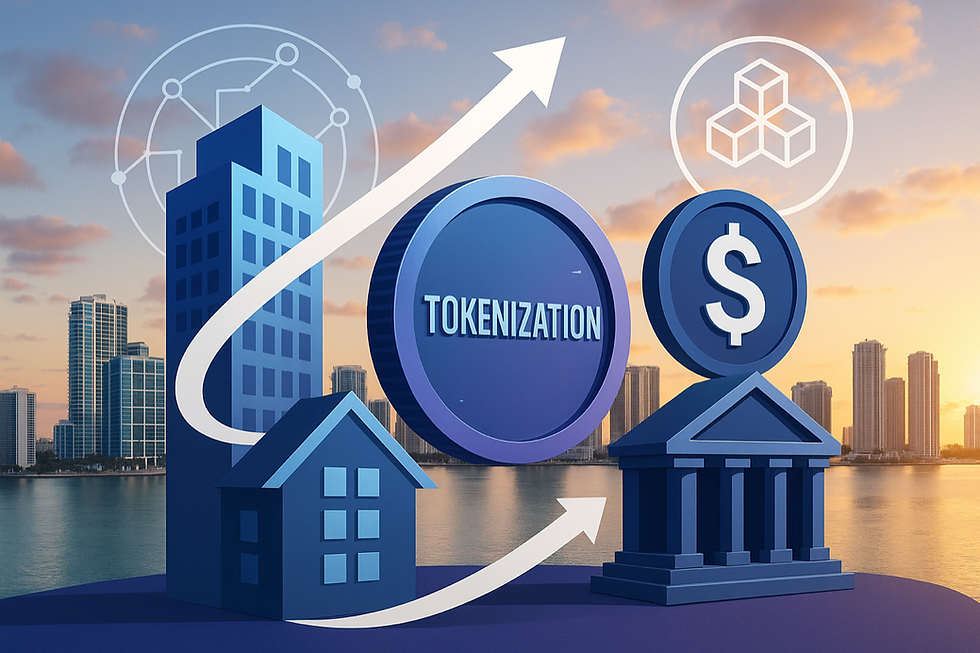
Beyond payments, blockchain is redefining ownership itself. With real-world asset (RWA) tokenization, property equity is digitized—each token representing fractional ownership of a real asset stored on-chain. This transforms traditionally illiquid investments into modular, tradeable instruments.
For investors, tokenization unlocks:
Lower barriers to entry. Instead of needing millions, you might invest $50 in a high-end property.
Enhanced liquidity. Tokens can be traded on secondary markets, easing entry and exit.
Global access. Investors worldwide can now participate in high-performing real estate markets previously out of reach.
For Participant Capital: Embracing tokenization places the firm at the frontier of RWA strategies. Participant Capital can design tokenized real estate funds or syndicates, educating clients on how to enter this niche with structure and prudence. Through white papers, webinars, and client tooling, the firm can help clients journey from crypto holdings to property holdings seamlessly.
“Blockchain is turning illiquid assets liquid—real estate is next,” said a leading fintech CEO at a recent industry summit.
Crypto as a Hedge Against Macroeconomic Uncertainty
The crypto rally is not driven solely by retail excitement—it increasingly reflects institutional interest in digital assets as a hedge. Amid tightening monetary policy, inflation, and market volatility, many are positioning crypto as a non-correlated asset class.
Eric Trump’s recent comment calling crypto the “greatest hedge” to real estate is provocative but illustrative of a broader shift: digital assets are now entering the same strategic conversations as gold or real estate.
For investors:
Complement don’t replace. Real estate still offers cash flows and stability; crypto brings growth potential and diversification.
Counterbalance volatility. As institutional money flows into crypto, allocations to digital assets may act as a stabilizing counterweight in turbulent markets.
For Participant Capital: The firm can package hybrid strategies—allocations to both real estate and crypto-backed instruments—to offer clients exposure without having to pick “either/or.” By publishing model portfolios, performance simulations, and risk frameworks, Participant Capital can position itself as a thought leader in blended asset strategies.
Institutional Flows & Use Cases: Evidence of Maturation
Institutional capital is already flowing in. BlackRock, Fidelity, and others have filed for broader crypto and tokenization exposure. In real estate, projects are experimenting with fractional token sales, tokenized mortgages, and crypto-backed lending.
For example, a recent commercial building in London issued a partial equity token offering, letting accredited international investors co-own a piece of the structure via blockchain. This exact type of deal—once the domain of private equity—is becoming more accessible.
This real-world evidence strengthens the thesis: crypto and property are converging, not colliding.
Your Guide to the Digital Real Estate Frontier
Crypto’s transformation from speculation to infrastructure is rewriting the playbook. For real estate, it means new transaction rails, new ownership models, and new capital sources.
Savvy investors are already exploring crypto-collateralized real estate funds, fractional property offerings, and crypto-enabled closing systems. The frontier is here—and Participant Capital is poised at the intersection.
To stay ahead, real estate firms must:
Educate clients on crypto integration.
Develop or partner on tokenization infrastructure.
Offer hybrid portfolios that balance growth and stability.
Bridge the worlds of on-chain capital and off-chain property value.
Participant Capital is uniquely positioned to lead this charge. With a focus on innovation, structure, and risk management, the firm can guide its clientele into this new era where digital wealth and property converge.
Ready to see how the next era of digital finance meets real estate?
Explore Participant Capital’s Digital Currency Investment Platform to discover how you can leverage your crypto holdings to invest in professionally managed, institutional-grade real estate—without selling your digital assets or triggering a taxable event.
· PwC. “Emerging Trends in Real Estate 2025.” https://www.pwc.com/emerging-trends-real-estate
· CoinDesk. “Bitcoin Adoption Expands Beyond Trading Into Real Estate and Luxury Assets.”https://www.coindesk.com
· Forbes. “How Real Estate Tokenization Is Unlocking Global Property Markets.”https://www.forbes.com
· Deloitte. “Real Estate Tokenization: The Future of Property Investment.”https://www.deloitte.com
· McKinsey & Company. “From Ripples to Waves: The Transformational Power of Tokenizing Assets.” https://www.mckinsey.com
Disclaimer: This blog post is for informational purposes only and does not constitute an offer to sell or a solicitation of an offer to buy any securities. Investment opportunities referenced herein are intended solely for accredited investors and may be offered only through appropriate offering documents. Past performance is not indicative of future results. Investing involves risk, including the possible loss of principal. Participant Capital does not provide tax or legal advice; individuals should consult their own advisors to understand the potential tax consequences. Views expressed are those of the authors and do not necessarily reflect the official views of Participant Capital or its affiliates.


During a rainy Sunday visit to my cousin's apartment, her son was sulking because an egg he spent weeks farming bucks for hatched into yet another common ant. Wanting to lift his spirits before lunch, I searched community trading guides to see how collectors buy adopt me pets to bypass the exhausting chore grind. The platform clearly showed live stock and instant bot delivery readiness. Within five minutes, a rideable golden dragon was resting safely in his game inventory, turning his gloomy morning into non-stop celebration.
Hey guys! My pizza delivery guy arrived last Tuesday, and while I fumbled for cash, he apologized for being slow because he'd been distracted by a live dealer game on his break. We bonded over it for five minutes at my doorstep. After dinner, I checked out https://slotcity.ua/live/live-Blackjack myself. The bet-behind feature caught my attention, letting me wager on another player's hand while waiting for a seat. I enjoyed studying how strangers played their cards before joining the table myself. Gave him a generous tip and a thumbs up next time. Funniest conversation I've had with delivery staff all year.
Choosing the right qualification often starts with understanding what is the difference between a certificate and a diploma and how each credential may support future goals. Educational forums frequently feature conversations on this topic from learners exploring various study options. The College of Contract Management offers online programmes designed to accommodate diverse learning needs.
Anyone researching structural engineering courses may find the College of Contract Management a helpful place to begin their learning journey in engineering education. The programme is designed to support learners aiming to understand structural concepts used in modern construction. Its flexible format allows study alongside existing work commitments. You can view more information here: Structural Engineering course details page. This qualification may help support long-term growth in the engineering sector.
Looking at how teams interact shows the importance of clear processes. The concept of what is team management supports understanding these interactions. It ensures that collaboration remains efficient and organized. Clear processes reduce misunderstandings and delays. The College of Contract Management explores these ideas in structured formats. This adds clarity to the topic.